


Hernia Surgery in Singapore
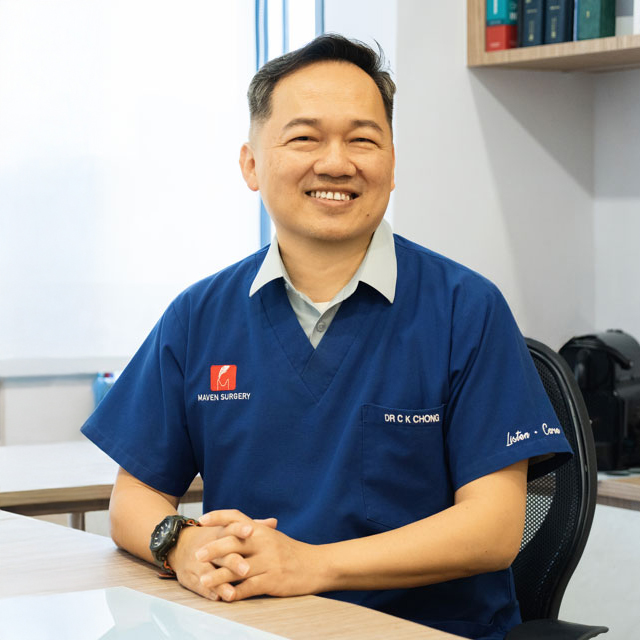
Dr Chong Chee Keong
Breast, Colorectal and General Surgeon
MBBS (Singapore), FRCS (Edinburgh), FRCS (Glasgow), FAMS (Singapore)
Specialist Accreditation in Intensive Care Medicine
Specialists Accreditation Board
Living with a hernia can affect more than just your physical comfort. What may begin as a small lump or occasional discomfort can gradually become more noticeable during everyday activities such as walking, exercising, lifting groceries or standing for extended periods. You may find yourself avoiding certain movements or changing your routine to prevent discomfort, making it harder to work, stay active or enjoy your usual lifestyle.
While not every hernia requires immediate surgery, hernias do not heal on their own and may gradually enlarge or become more symptomatic over time. When symptoms begin to interfere with your daily life or there is a risk of complications, hernia surgery may be recommended to repair the weakened area, relieve discomfort and help you return to your normal activities safely.
What Is a Hernia?
A hernia develops when an internal organ or fatty tissue pushes through a weakened area in the surrounding muscle, fascia or connective tissue. Although hernias can occur in different parts of the body, they most commonly affect the abdomen and groin.
Some hernias appear as a visible lump that becomes more noticeable when standing, coughing or straining, while others may cause discomfort, aching or a feeling of heaviness without an obvious bulge. The severity of symptoms varies depending on the type and size of the hernia.
Unlike some muscle injuries, a hernia does not heal on its own. Over time, it may gradually enlarge or become more symptomatic, and in some cases, complications such as incarceration or strangulation can develop. For this reason, an assessment by a general surgeon is recommended if you suspect you have a hernia.
What Causes a Hernia?
Hernias develop when a weakness in the abdominal wall is combined with pressure from inside the abdomen, allowing tissue to protrude through the weakened area. This weakness may be present from birth or develop later in life.
Congenital
Some people are born with areas of weakness in the abdominal wall that do not fully close during development. While these weaknesses may not cause symptoms immediately, they can become more apparent later in life as pressure within the abdomen increases during everyday activities.
Acquired
Many hernias develop over time as the abdominal wall weakens due to ageing or previous injury. Factors that increase pressure within the abdomen may also contribute to hernia formation, including:
- Heavy lifting or repetitive physical exertion
- Chronic coughing
- Persistent constipation and straining during bowel movements
- Obesity
- Pregnancy
- Previous abdominal surgery, which may weaken the surgical incision
- Repeated straining caused by an enlarged prostate or difficulty passing urine
Having one or more of these risk factors does not necessarily mean a hernia will develop, but they can increase the likelihood of one occurring.
What Are the Different Types of Hernia?
Hernias are classified according to where they occur. Identifying the type of hernia helps determine the most appropriate treatment approach.
Inguinal Hernia
An inguinal hernia develops in the groin when tissue protrudes through a weakened area of the lower abdominal wall. It is the most common type of hernia and occurs more frequently in men, although women can also be affected.Femoral Hernia
A femoral hernia occurs lower in the groin through the femoral canal. It is less common than an inguinal hernia but is more frequently seen in women. Because femoral hernias have a higher risk of becoming trapped, they often require prompt surgical treatment.Umbilical Hernia
An umbilical hernia forms near the belly button when tissue pushes through a weakness in the abdominal wall. While common in infants, it can also occur in adults, particularly during or after pregnancy or in individuals with increased abdominal pressure.Incisional Hernia
An incisional hernia develops at the site of a previous abdominal operation when the surgical wound does not heal with full strength. It may occur months or even years after surgery.Hiatal Hernia
A hiatal hernia occurs when part of the stomach moves through an opening in the diaphragm into the chest cavity. Unlike other hernias, it usually does not cause a visible lump and may instead present with symptoms such as acid reflux, heartburn or difficulty swallowing.Ventral / Epigastric Hernia
A ventral or epigastric hernia develops along the midline of the abdomen when tissue protrudes through a weakened area of the abdominal wall. These hernias may occur naturally or following previous abdominal surgery.
What Are the Symptoms of a Hernia?
Symptoms vary depending on the type, size and location of the hernia. Some people experience only a small, painless lump, while others develop persistent discomfort that interferes with daily activities.
Common symptoms include:
- A visible lump or bulge that may become more noticeable when standing, coughing or straining
- Pain, aching or discomfort at the site of the hernia
- A feeling of heaviness, pressure or dragging in the affected area
- Symptoms that worsen during lifting, exercise or prolonged standing and improve when lying down
- A burning or pulling sensation around the hernia
Seek immediate medical attention if a hernia becomes suddenly painful, cannot be pushed back in, or is associated with redness, nausea, vomiting or abdominal swelling. These symptoms may indicate incarceration or strangulation, which are surgical emergencies requiring prompt treatment.
How Are Hernias Diagnosed?
Diagnosing a hernia usually begins with a consultation and physical examination. Your surgeon will ask about your symptoms, when they first appeared and whether they become more noticeable during activities such as lifting, coughing or standing. In many cases, the diagnosis can be made based on your medical history and examination alone.
If the diagnosis is uncertain or additional information is needed for treatment planning, imaging tests may be recommended. These may include:
- Ultrasound to evaluate soft tissues and certain groin or abdominal hernias.
- CT scan to provide detailed images of the abdominal wall and identify deeper or more complex hernias.
- MRI scan in selected cases where further assessment is required.
- Upper gastrointestinal endoscopy may be performed for suspected hiatal hernias, particularly when symptoms such as persistent reflux or difficulty swallowing are present.
A thorough assessment helps determine the type of hernia, whether complications are present and the most appropriate treatment approach.
How Are Hernias Treated?
Unlike some other conditions, a hernia does not heal on its own. While small hernias that cause minimal symptoms may be monitored in selected cases, surgery is the only definitive treatment to repair the weakened abdominal wall and prevent the hernia from enlarging or developing complications.
The most appropriate surgical approach depends on factors such as the type, size and location of the hernia, your overall health, previous abdominal operations and your surgeon's assessment.
Open Hernia Repair
Open hernia repair involves making an incision directly over the hernia to return the protruding tissue to its normal position before repairing the weakened area of the abdominal wall. This approach may be recommended for larger or more complex hernias and can often be performed under general or regional anaesthesia.Laparoscopic (Keyhole) Hernia Repair
Laparoscopic hernia repair uses several small incisions through which a camera and specialised surgical instruments are inserted. The hernia is repaired from within the abdomen, often resulting in smaller scars, less post-operative discomfort and a quicker return to normal activities for suitable patients.Robotic-Assisted Hernia Repair
Robotic-assisted hernia repair is a minimally invasive technique that uses robotic technology to provide the surgeon with enhanced precision, flexibility and visualisation during the procedure. It may be beneficial for selected patients, particularly those with more complex abdominal wall hernias.Mesh Repair vs Tissue Repair
Hernias can be repaired using either a surgical mesh or your own tissues. The most appropriate method depends on factors such as the type and size of the hernia, its location, your medical history and your surgeon's assessment.
| Mesh Repair | Tissue Repair |
|---|---|
| Reinforces the weakened abdominal wall using a surgical mesh. | Repairs the hernia using the patient's own tissues without mesh. |
| Commonly used for many adult hernias. | May be suitable for selected patients or certain smaller hernias. |
| May reduce the risk of recurrence in appropriate cases. | Avoids the use of a permanent mesh implant. |
| The mesh is designed to integrate with surrounding tissue over time. | The repair relies on suturing the body's own tissues together. |
| Your surgeon will recommend this approach when appropriate based on the hernia and your medical history. | Your surgeon may recommend this approach when it is more suitable for your individual condition. |
What to Expect: Before, During & After Surgery
Understanding what happens before, during and after hernia surgery can help you prepare for your procedure and recovery. While every treatment plan is tailored to the type of hernia and surgical approach, most patients follow a similar pathway from pre-operative assessment through to post-operative care and follow-up.
Before Surgery
Before your operation, you will undergo a pre-operative assessment to ensure you are fit for surgery. This may include blood tests, imaging studies and a review of your medical history and current medications. You will also receive instructions regarding fasting and whether any medications should be temporarily stopped before the procedure.During Surgery
Hernia repair is commonly performed under general anaesthesia, although some procedures may be carried out using regional or local anaesthesia depending on the type of hernia and surgical approach. During the operation, the protruding tissue is returned to its normal position before the weakened area is repaired using either mesh or your own tissue.Recovery After Surgery
Recovery varies depending on the type of hernia repaired and the surgical technique used. Many patients are able to return home on the same day, while others may require a short hospital stay.
Most people are encouraged to begin walking soon after surgery and gradually resume light daily activities. Heavy lifting and strenuous exercise should be avoided until your surgeon advises it is safe to do so. Follow-up appointments allow your recovery to be monitored and provide an opportunity to address any concerns during the healing process.
If you have symptoms of a hernia, a consultation can help determine the type of hernia and whether surgery is the most appropriate treatment for you.
What Are the Risks of Hernia Surgery?
Hernia surgery is a commonly performed procedure and is generally safe. However, like all surgical procedures, it carries some risks. Your surgeon will discuss these with you during your consultation based on your individual condition.
Potential risks specific to hernia surgery include:
- Hernia recurrence
- Chronic groin or surgical-site pain
- Fluid collection (seroma)
- Mesh-related complications
- Injury to nearby structures
Careful surgical planning, appropriate post-operative care and attending follow-up appointments all help support a smooth recovery.
Hernia Surgery Cost in Singapore
The cost of hernia surgery varies depending on your individual treatment plan. Factors that may influence the overall cost include:
- The type and complexity of the hernia
- The surgical approach (open, laparoscopic or robotic-assisted)
- The hospital where the procedure is performed
- Anaesthesia, hospital and surgical consumables, such as mesh where required
Eligible patients may be able to offset part of the cost through MediSave, MediShield Life and Integrated Shield Plans, depending on their coverage. During your consultation, your surgeon will provide a personalised cost estimate and explain the available financing options.
Take the Next Step Towards
Hernia Relief with Maven Surgery
Living with a hernia can affect your comfort, mobility and ability to enjoy everyday activities. Seeking an early assessment allows your condition to be properly evaluated and helps determine whether surgery is the most appropriate treatment.
At Maven Surgery, we provide comprehensive assessment and surgical treatment for a wide range of hernias, with personalised care from consultation through recovery. Our practice is led by Dr Chong Chee Kong, a breast, colorectal and general surgeon who will assess your condition, explain the available treatment options and recommend a surgical approach tailored to your hernia, symptoms and individual needs. Schedule a consultation with Dr Chong and discuss your treatment options.
Frequently Asked Questions About Hernia
When should you see a doctor for hernia?
What happens if a hernia is left untreated?
Are there any non-surgical options to treat hernia?
What are the differences between herniorrhaphy, hernioplasty and herniotomy?

Our Hernia Surgeon in
Singapore
Dr Chong Chee Keong
Breast, Colorectal and General Surgeon
MBBS (Singapore), FRCS (Edinburgh), FRCS (Glasgow), FAMS (Singapore)
Specialist Accreditation in Intensive Care Medicine
Specialists Accreditation Board
Dr Chong has over two decades of experience in general surgery, providing
comprehensive care for patients with a wide range of hernias. He is
experienced in both open and minimally invasive hernia repair techniques,
tailoring treatment to each patient's condition and recovery goals. Known for his clear communication and patient-centred approach, Dr Chong takes the
time to explain every treatment option, helping patients make informed
decisions and feel supported throughout their surgical care.
“Your Partner in Every Step of Recovery and Beyond”
For appointments and enquiries, contact us via form below or call us at (+65) 6355 5285

Mount Elizabeth Novena Specialist Centre
38 Irrawaddy Road #06-33,Singapore 329563
Parkway East Medical Centre
319 Joo Chiat Place #02-05,Singapore 427989
Farrer Park Medical Centre
1 Farrer Park Station Rd #15-13,Singapore 217562
Tel : (+65) 6355 5285
Whatsapp : (+65) 6355 5285
Operating Hours: Monday to Friday: 9:00 AM to 5:00 PM Saturday: 9:00 AM to 1:00 PM Closed on Sundays and Public Holidays