


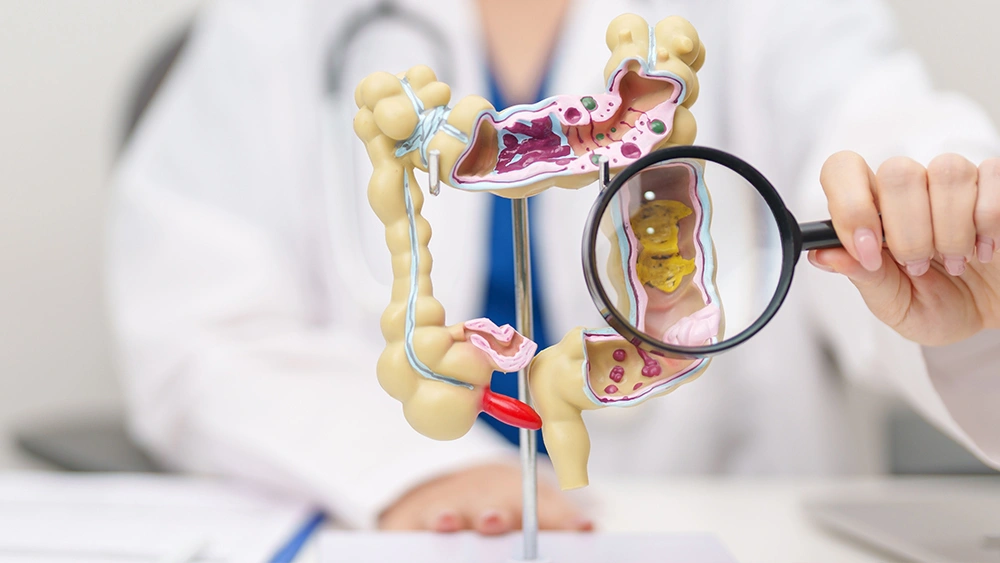
What Is the Difference Between Colon Cancer and Rectal Cancer?

Dr Chong Chee Keong
Breast, Colorectal and General Surgeon
MBBS (Singapore), FRCS (Edinburgh), FRCS (Glasgow), FAMS (Singapore)
Specialist Accreditation in Intensive Care Medicine
Specialists Accreditation Board, Medical Director & Senior Consultant

Dr Chong Chee Keong Breast, Colorectal and General Surgeon MBBS (Singapore), FRCS (Edinburgh), FRCS (Glasgow), FAMS (Singapore) Specialist Accreditation in Intensive Care Medicine Specialists Accreditation Board, Medical Director & Senior Consultant
Colon cancer and rectal cancer are both types of colorectal cancer, but they develop in different parts of the large intestine. Colon cancer arises in the colon, while rectal cancer develops in the final section of the large intestine before the anus. Their location can influence how symptoms present and, importantly, how treatment is planned.
Symptoms can overlap considerably, so it is not possible to reliably distinguish colon cancer from rectal cancer based on symptoms alone. Colonoscopy, biopsy and imaging may be used to establish the diagnosis, determine the cancer's location and assess its extent before treatment is planned.
Key Takeaways
- Colon cancer develops in the colon, while rectal cancer develops in the rectum. Both are classified as colorectal cancers.
- Symptoms often overlap, which means the location of the cancer cannot reliably be determined from symptoms alone.
- Colonoscopy and biopsy can confirm colorectal cancer, while imaging helps assess its location and extent for treatment planning.
- Treatment can differ between colon and rectal cancer. Rectal cancer may require additional consideration of radiotherapy or treatment before surgery, depending on its stage and location.
- Prognosis depends on several factors, particularly the stage and biological characteristics of the cancer, rather than its location alone.
What Are Colon Cancer and Rectal Cancer?
The main distinction between colon cancer and rectal cancer is where the tumour begins. Both develop within the large intestine, but the colon and rectum have different anatomical positions. This distinction becomes particularly important when doctors plan treatment.
Understanding the Anatomy of the Colon and Rectum
The large intestine includes the colon and rectum:
- Colon: Makes up most of the large intestine and includes the ascending, transverse, descending and sigmoid colon.
- Rectum: Forms the final section of the large intestine before the anus and temporarily stores stool before a bowel movement.
The rectum sits within the pelvis, close to other organs and structures, while the colon extends through the abdomen. These anatomical differences can affect surgical planning and the other treatments that may be considered.
Why They Are Both Called Colorectal Cancer
The term “colorectal cancer” includes cancers that begin in either the colon or rectum. These cancers are grouped together because both arise within the large intestine and share several features, although their exact location can affect how they are managed.
How Do the Symptoms Differ Between Colon Cancer and Rectal Cancer?
Colon cancer and rectal cancer can cause similar symptoms, and either may cause few or no noticeable symptoms in the early stages. However, the location of the tumour can influence how symptoms present. Rectal cancers may cause symptoms related to passing stool, while cancers elsewhere in the colon can sometimes produce less obvious signs.
Changes in Bowel Habits
Both colon and rectal cancer can cause changes from a person's usual bowel habits, such as:
- Diarrhoea or constipation that persists
- Changes in the frequency or pattern of bowel movements
- Changes in the usual appearance or consistency of stools
- A persistent sensation that the bowel has not emptied completely
A persistent sensation of incomplete emptying, sometimes called tenesmus, may occur with rectal cancer because the tumour is located close to the end of the bowel. Colon cancer can also alter bowel habits, although the pattern varies depending on the tumour's location and whether it affects the passage of stool.
Rectal Bleeding and Blood in the Stool
Blood in the stool or rectal bleeding can occur with both colon and rectal cancer, although non-cancerous conditions such as haemorrhoids can cause similar symptoms.
Rectal tumours may cause visible red blood because they are located close to the anus. Colon cancers can also cause visible bleeding, while slower or less obvious blood loss from some colon tumours may instead be detected through iron-deficiency anaemia.
The colour or appearance of blood cannot reliably identify where a tumour is located or determine whether the bleeding is caused by cancer.
Symptoms That Can Occur with Either Cancer
Some symptoms can occur with either colon or rectal cancer and do not reliably indicate where the tumour is located. These may include:
- Persistent abdominal discomfort, cramping or bloating
- Unexplained weight loss or reduced appetite
- Fatigue or weakness, including symptoms related to iron-deficiency anaemia
These symptoms are not specific to colorectal cancer and may have many other causes, so they cannot distinguish colon cancer from rectal cancer on their own.
Does One Have a Better Prognosis Than the Other?
Neither colon cancer nor rectal cancer automatically has a better prognosis. Outlook depends on several factors, particularly the stage at diagnosis, as well as the tumour's biological characteristics, the treatments available and the patient's overall health.
The cancer's location can still influence treatment planning and outcomes in individual cases, so prognosis is assessed according to the specific diagnosis rather than whether the cancer is simply classified as colon or rectal cancer.
Why Early Detection Makes a Difference
Colorectal cancer detected before it has spread to distant organs generally has more treatment options. When the cancer remains localised, treatment with curative intent may be possible, although the approach still depends on its location and stage.
Early colorectal cancer may cause no noticeable symptoms. Colorectal cancer screening can therefore help detect precancerous polyps or cancer in eligible people who do not have symptoms.
Factors That Influence Prognosis
Several factors influence a person's outlook after a diagnosis of colon or rectal cancer, including:
- Cancer stage: Whether the cancer is confined to the bowel or has spread to lymph nodes or distant organs is an important prognostic factor.
- Tumour characteristics: The cancer's location and biological or molecular features can influence its behaviour and treatment options.
- Overall health: A patient's general health and other medical conditions can affect which treatments are suitable.
- Response to treatment: How the cancer responds to treatment can also influence the individual outlook.
For this reason, prognosis is assessed individually rather than predicted from the label of colon cancer or rectal cancer alone.
How Does Treatment Differ Between Colon Cancer and Rectal Cancer?
Treatment for colon and rectal cancer can differ because of the tumour's location, stage and surrounding anatomy. Surgery is important in the treatment of many colorectal cancers, but the timing of surgery and the need for other treatments may differ between colon and rectal cancer.
| Colon Cancer | Rectal Cancer | |
|---|---|---|
| Treatment approach | For many localised colon cancers, surgery may be performed early in the treatment pathway. | Treatment may involve chemotherapy and/or radiotherapy before surgery, depending on the tumour's stage and location. |
| Surgery | Surgery typically involves removing the affected section of the colon together with nearby lymph nodes. The remaining bowel may be joined together where appropriate. | Surgery involves removing the rectal tumour and affected tissue. The exact approach depends partly on where the tumour is located within the rectum. |
| Treatment before surgery | Pre-operative treatment is not routinely required for many localised colon cancers, although treatment varies according to the individual case. | Chemotherapy and/or radiotherapy may be recommended before surgery for selected rectal cancers. |
| Treatment after surgery | Chemotherapy may be recommended depending on the cancer stage and other pathological findings. | Further treatment depends on the treatment already received, the surgical findings and the final cancer stage. |
| Surgical considerations | Planning depends on which section of the colon is affected and how much bowel needs to be removed. | The tumour's position within the pelvis can affect whether the anal sphincter can be preserved and whether a temporary or permanent stoma may be required. |
The appropriate colorectal cancer treatment plan is determined individually. A colorectal specialist considers the tumour's exact location and stage, alongside other clinical findings, when deciding the sequence of treatment and whether colorectal surgery is appropriate.
Receive the Appropriate Treatment for Colorectal Cancer with Dr Chong
Distinguishing between colon and rectal cancer is important because the tumour's exact location can influence treatment planning, particularly when surgery is being considered. Specialist assessment can establish the diagnosis and stage of the cancer and determine which treatment approach may be appropriate.
Maven Surgery provides specialist assessment and surgical care for colorectal conditions in Singapore, including colon and rectal cancer.
Dr Chong Chee Keong is a breast, colorectal and general surgeon with more than 20 years of clinical experience, including the surgical management of colorectal cancer. If you have been diagnosed with colorectal cancer or require assessment concerning bowel symptoms, you may schedule a consultation to discuss the appropriate next steps.
Frequently Asked Questions (FAQs) About Colon and Rectal Cancer
Can colon cancer or rectal cancer develop without symptoms?
Are colon cancer and rectal cancer staged in the same way?
Can colon cancer spread to the rectum, or vice versa?
Is a colonoscopy able to detect both colon cancer and rectal cancer?
Meet Our Colorectal Specialist in Singapore
Dr Chong Chee Keong Breast, Colorectal and General Surgeon MBBS (Singapore), FRCS (Edinburgh), FRCS (Glasgow), FAMS (Singapore) Specialist Accreditation in Intensive Care Medicine Specialists Accreditation Board, Medical Director & Senior Consultant
Dr Chong Chee Keong is a Breast, Colorectal and General Surgeon with over 20 years of clinical experience. Dual-fellowship trained and highly accredited, he founded Maven Surgery with a commitment to elevating the standard of care for breast and colorectal cancers, the two most common cancers affecting women and men.
Dr Chong works closely with multidisciplinary teams of surgical, medical and radiation oncologists and remains actively involved in international cancer conferences to stay at the forefront of advancing techniques. He has a strong focus on minimally invasive surgery, recognising the importance of preserving self-image while maintaining treatment safety and effectiveness.
“Your Partner in Every Step of Recovery and Beyond”
For appointments and enquiries, contact us via form below or call us at (+65) 6355 5285

Mount Elizabeth Novena Specialist Centre
38 Irrawaddy Road #06-33,Singapore 329563
Parkway East Medical Centre
319 Joo Chiat Place #02-05,Singapore 427989
Farrer Park Medical Centre
1 Farrer Park Station Rd #15-13,Singapore 217562
Tel : (+65) 6355 5285
Whatsapp : (+65) 6355 5285
Operating Hours: Monday to Friday: 9:00 AM to 5:00 PM Saturday: 9:00 AM to 1:00 PM Closed on Sundays and Public Holidays
